Why Authenticity Can’t be Faked
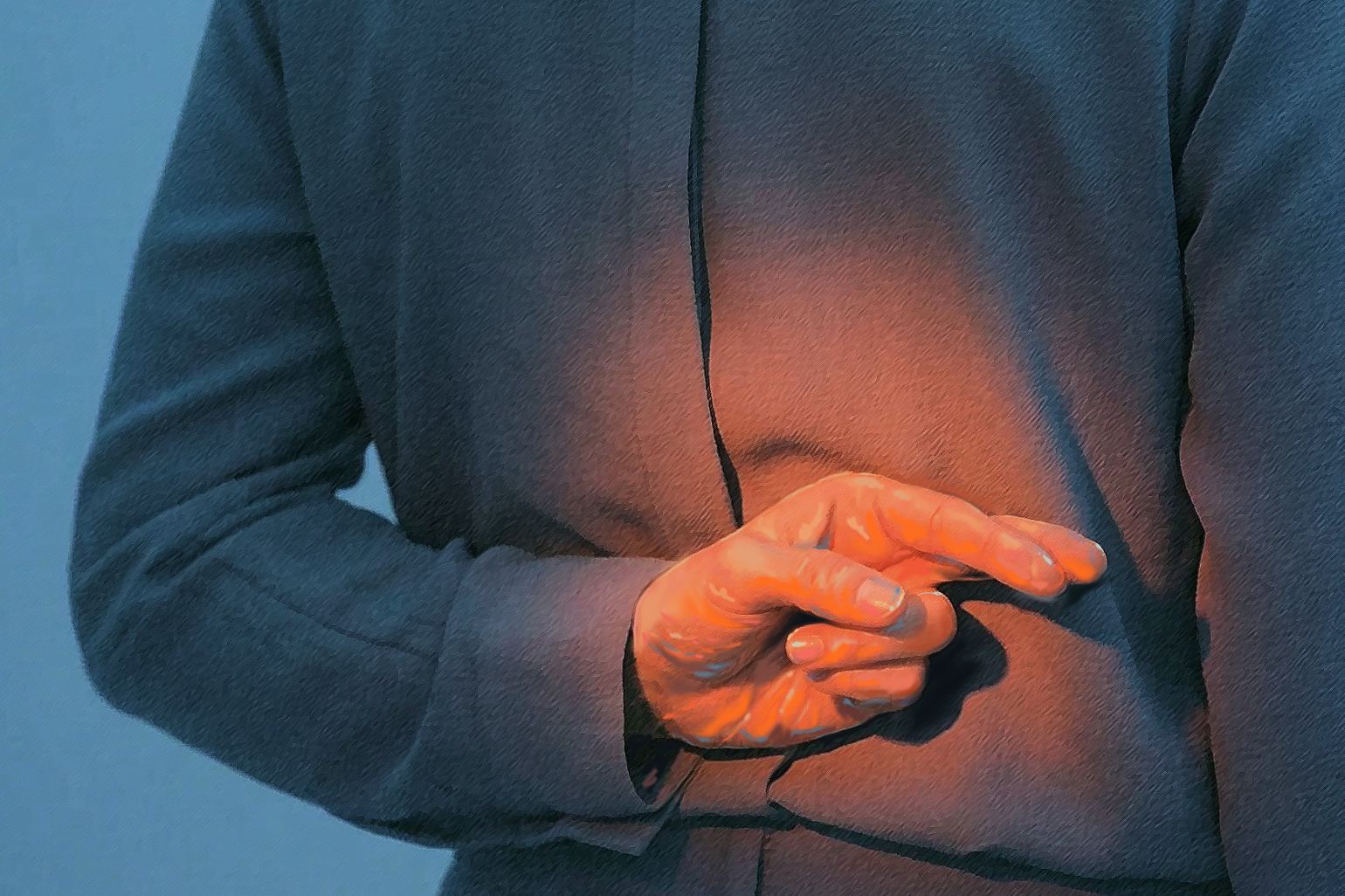
Most audiences can spot inauthentic storytelling faster than communicators expect. Not because they’ve analyzed the message, but because something about it simply feels off.
The most effective public affairs campaigns share a common thread. They feel real. Real in a way audiences recognize instinctively, often before they can articulate why.
Authenticity has always been the hardest thing to get right in this business. It resists shortcuts and can’t be engineered.
So the industry has spent decades working around it.
Actors are cast to stand in for the people affected, and stories are written by strategists, not lived by their subjects. Composite characters appear in campaigns because they’re easier to manage than real people with real lives.
Now, AI has made it easier than ever to go further down that path. Instead of finding the people your campaign is meant to represent, you can simply generate them. No travel. No conversations. No unpredictability. No trust required.
The result is always the same: the appearance of authenticity rather than the real thing.
That trade-off isn’t new. What’s new is how easy it has become to scale.
The debate now consuming the communications industry asks what should be real, what can be generated, and what will audiences accept. It is an important conversation. But it is also obscuring a harder truth.
Inauthentic storytelling has been quietly undermining public affairs campaigns for decades.
AI didn’t create the problem. It simply removed the friction. And friction was often the only thing protecting audiences from our worst habits.
To understand why this trade-off fails, we have to look not at the messages we create, but at the biology of belief itself.
The Biology of Belief
Storytelling works because the brain does not experience a good story as information. It experiences it as a simulation.
When someone tells a compelling story, something remarkable happens inside the listener’s brain. Brainwave activity begins to synchronize with the storyteller‘s. Princeton neuroscientist Uri Hasson spent years mapping this phenomenon and calls it neural coupling. The closer that synchrony becomes, the deeper the listener’s understanding.
You aren’t just hearing someone’s words. For a moment, you are living their experience.
That mechanism is extremely sensitive to authenticity.
Real people with real stakes produce dramatically stronger neural engagement than generic or invented ones. Give the brain a thin character and it produces a thin response. Give it a real person, someone whose choices, fears, and motivations feel grounded in reality, and something else switches on.
The parts of the brain responsible for understanding other people come online. We begin predicting what they’ll do next. We feel their frustration, their relief, their hope.
The brain is remarkably sophisticated at detecting whether a story reflects an actual human experience or a convincing approximation.
Chemistry plays a role as well. Compelling narratives trigger the release of oxytocin, the neurochemical associated with trust and human bonding, as neuroeconomist Paul Zak has documented.
This is why a powerful story changes how people feel. It lowers skepticism. It creates openness. It makes action feel possible.
Inside a genuine story, audiences stop evaluating and start experiencing.
Authentic narrative lowers their guard. Manufactured content raises it.
The Authenticity Gap
Consider why direct-to-camera social content performs so well. A real person speaking plainly to an audience almost always outperforms content featuring actors and a carefully written script. It feels less controlled but also more honest.
The same principle applies in public affairs. It simply gets ignored far more often.
Across industries, the pattern repeats itself. A trade association hires an actor to talk about the impact of legislation on a small business. An advocacy group uses an AI-generated image of a smiling middle-class family to signal “American values.” A corporate campaign relies on stock photography to tell the story of medical innovation.
My kids have a word for content like this. They call it cringe.
What they’re reacting to is the same dynamic neuroscientists have spent decades studying. It is the moment when something meant to feel human instead feels manufactured. The public affairs industry has been producing versions of that moment for years.
The rationale is understandable. Real people are harder to find. Harder to prepare. Harder to control. Manufactured stand-ins are safer. Flexible. Demographically precise. But they’re also hollow. They borrow the emotional authority of lived experience without actually containing any.
Research published in the Journal of Business Research shows that audiences report significantly lower trust when they believe content is machine-generated. This happens even when they can’t articulate why and even when the content itself is indistinguishable from human-created work. A separate study by TBWA found a similar pattern: trust and engagement drop when audiences suspect a machine created the message. The same dynamic appears, in smaller ways, with stock imagery and scripted actors.
Authenticity exists on a spectrum. But the direction of the effect is always the same.
And audiences almost never announce it when they feel it.
They don’t leave angry comments about inauthentic storytelling. They simply don’t share the video. They don’t forward the email. They sit through the presentation and forget it by Tuesday.
The campaign launches. Nothing moves. And most organizations never connect the underperformance to its real cause. So the pattern repeats.
The Cost Communicators Overlook
The real cost of manufactured storytelling isn’t just weaker performance. It’s asymmetry.
Authentic stories compound and propagate. They travel in ways synthetic ones rarely do. A real person telling their own story in their own words doesn’t just reach the intended audience. It moves through networks. It gets shared inside a policymaker’s office. It gets forwarded across a coalition. It becomes the anecdote someone repeats in a meeting or on a panel.
People pass along what actually moved them.
Synthetic content rarely does. It reaches the audience you paid to reach, fulfills its distribution plan, and stops there. Nothing spreads. Nothing grows.
In a media environment now saturated with AI-generated images, stock photography, and carefully manufactured narratives, genuine human stories have never been more valuable.
The communicators who succeed in this moment won’t be the ones who reject AI outright. They’ll be the ones who understand where it belongs: as a research assistant, a creative collaborator, and a force multiplier. And where it doesn’t.
Authentic stories cannot be generated. They have to be found.